




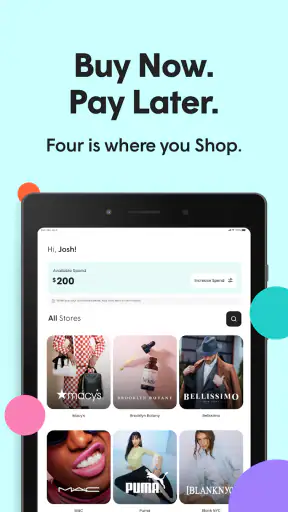
I tried Four as a shopping app with one clear purpose: helping me spread a purchase across scheduled payments instead of paying the whole amount at checkout. That makes it interesting for planned purchases, especially when a shop accepts Four and I want to keep a little more room in my monthly budget. It is free to install, aimed at everyone, and comes from Four Technologies, Inc.
My overall impression is positive but practical rather than enthusiastic. Four can make a larger checkout feel easier to manage, yet it does not make the purchase cheaper by itself. The useful question is not simply whether I can divide a payment, but whether the repayment schedule fits my income without turning an ordinary purchase into a source of stress. Used with that mindset, the app has a clear place in the shopping category.
How Four feels in everyday shopping
The app is built around the “buy now, pay later” idea, but its value depends heavily on where I shop and how carefully I read the payment details. I found the concept easiest to understand when I treated Four as a checkout tool rather than as a general-purpose shopping marketplace. I first decide what I actually need, then check whether Four is available for that purchase, and only after that consider whether splitting the cost makes sense.
A realistic example would be replacing a worn-out household item when the expense arrives at an inconvenient time. Instead of postponing the purchase or using a conventional credit card balance, I could choose Four if the retailer supports it and review the scheduled payments before confirming. That workflow is more useful for a planned expense than for impulse shopping, because the app can make an affordable item appear deceptively easy to buy.
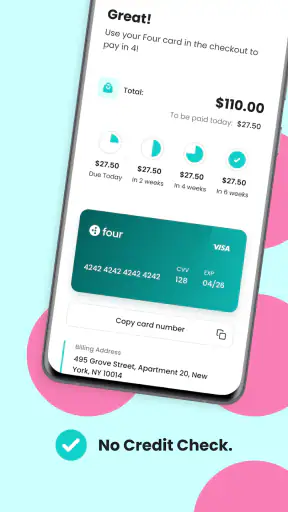
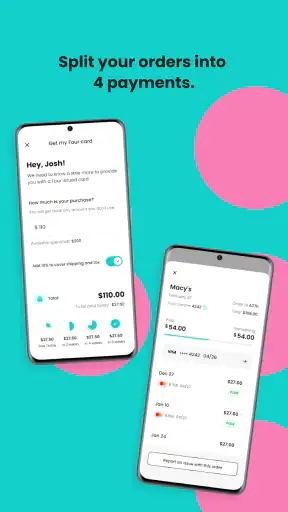
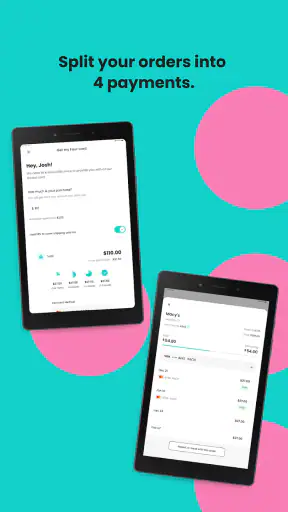
The interface is most helpful when it keeps the important information close to the decision: the amount due now, the later installments, and the dates involved. I recommend pausing at that point rather than tapping through automatically. A split payment is still a commitment, and the convenience of the first screen should not replace checking the full repayment plan.
Four is free, which removes an obvious barrier to trying it. That does not mean every transaction has the same financial outcome. Eligibility, merchant support, payment timing, and the terms shown during checkout matter more than the download cost. I would never judge the service only by the fact that the app itself costs nothing.
Where the app is genuinely useful
I see the strongest use case in purchases that are necessary, already budgeted for, and slightly awkward to pay in one go. A replacement appliance accessory, school-related item, or seasonal purchase can be easier to handle when the installments line up with upcoming paydays. The key is that I should already know how the later payments will fit into my budget.
Another practical strength is decision visibility. Instead of mentally calculating how a purchase might affect the next few weeks, I can use the payment schedule as a concrete checkpoint. That makes Four more useful than simply putting the same purchase on a credit card and hoping to remember it later. The schedule gives me something specific to review before I commit.
It can also help me compare two buying choices more honestly. If one product has a lower total cost but a less comfortable payment pattern, while another costs more and only feels attractive because it is divided, Four exposes the timing difference. I still need to compare the final amounts, but the installment view encourages me to think beyond the first payment.
One non-obvious habit I recommend is grouping the app into a weekly money check rather than opening it only when shopping. I can review upcoming commitments alongside ordinary bills and subscriptions, then decide whether a new purchase belongs in the same period. This turns Four from a tempting checkout shortcut into a planning reminder.
What the current release tells me
The current version is 1.17.84, and the app has been available since January 22, 2021. That history matters because Four is not a brand-new experiment that I would treat as untested simply because the idea is fashionable. It has had time to establish a recognizable role for shoppers who want installment payments, while the present version shows that the product is still being maintained.
Its public reception is also fairly strong: Four holds a 4.4 average from around thirteen thousand ratings, with roughly five thousand four hundred written reviews and over one million installs. I read those figures as evidence of meaningful adoption, not as a guarantee that every checkout will be smooth. Payment apps can work well for one person and feel restrictive to another because the merchant, purchase, and account circumstances differ.
The developer, Four Technologies, Inc, has kept the product focused rather than turning it into a broad shopping platform in my experience. That focus is helpful: I do not need a crowded catalog to understand why I opened the app. At the same time, a focused payment tool has less value when the stores I use do not offer it at the moment I need it.
For existing users, a newer version is most valuable when it makes the payment journey clearer and less fragile. Small improvements to account flow, checkout handoff, or schedule presentation can matter more here than flashy additions. I would judge an update by whether I can understand a commitment faster and whether fewer steps stand between choosing Four and seeing the complete plan.
How I would use it without losing control
My first rule is to check the total repayment amount before thinking about the installment amount. A small first payment can make an expensive purchase feel harmless, so I reverse the order: total first, schedule second, convenience last. If the total is not comfortable, dividing it does not solve the underlying problem.
My second rule is to leave room for ordinary surprises. If a payment plan uses nearly all the money I expect to have after rent, transport, food, and existing commitments, I skip the purchase. This is especially important for users whose income changes from week to week. A schedule that looks manageable on a good month may become a nuisance when hours are reduced or an unexpected bill arrives.
My third tip is to save the confirmation details in a place I will actually check. I do not rely on memory for installment dates. A personal calendar reminder or a regular budget review helps me avoid treating the app as invisible debt. The app can show the plan, but my own routine determines whether I stay on top of it.
I also avoid using Four for repeated small treats. Individual purchases may look minor, but several active plans can overlap and create a larger obligation than expected. The app is easier to manage when I use it selectively, for a small number of deliberate purchases rather than as my default payment method.
Where it differs from cards and ordinary shopping apps
Compared with a conventional credit card, Four offers a more purchase-specific way to think about repayment. A card often blends many transactions into one statement, while an installment service makes the individual purchase more visible. That can be a real advantage for budgeting, although it also means I need to monitor several separate commitments if I use the service repeatedly.
Compared with paying from a bank account, Four provides flexibility but adds future obligations. Paying immediately is simpler and removes the risk of forgetting later installments. If I already have the money available and the purchase is routine, I usually prefer the direct payment because there is no benefit in creating another schedule just for the sake of splitting it.
Compared with other buy-now-pay-later options, the deciding factor is not a slogan but availability and clarity. I would choose whichever service the retailer supports and whichever one presents the repayment terms most plainly. Four is a good candidate when its checkout experience is convenient, but I would not open several services just to chase installment options. That can make tracking harder and weaken the budgeting benefit.
Traditional financing may be more appropriate for a genuinely large purchase that needs careful comparison, a longer repayment period, or formal lending features. Four feels better suited to a defined retail transaction where I can understand the schedule immediately. It is not a replacement for every form of credit, and treating it as one could lead to poor decisions.
Friction I noticed and who should skip it
The biggest limitation is built into the model: Four makes payment timing easier, not affordability itself. The app can reduce the pain of checkout while increasing the number of future dates I need to remember. That trade-off is acceptable for disciplined users, but it is a poor match for anyone already struggling to keep up with bills.
Merchant acceptance is another practical constraint. A payment app is only useful at participating checkout points, so it may not help when my preferred retailer does not support it. I would not change a carefully chosen product or store solely to use Four. The shopping decision should come first, with the payment method serving it rather than controlling it.
There is also a psychological risk. Seeing a smaller installment can encourage me to focus on what is payable today instead of what I am agreeing to overall. I consider that a serious reason to slow down, particularly when shopping from a phone late at night or while distracted. The app is most responsible when I use it as a transparent schedule, not as permission to buy beyond my means.
I would skip Four if I need absolute simplicity, if my income is unpredictable, or if I know I will not review future payment dates. I would also skip it for purchases I can comfortably pay for now, unless there is a specific budgeting reason to divide the cost. In those situations, direct payment is cleaner and less demanding.
Questions I would settle before downloading
One question is whether the app is suitable for younger users. Four carries an Everyone content rating, which describes the nature of the app rather than automatically making every financial decision appropriate for every person. I would still make sure the account and purchase are being used responsibly and that the person making the commitment understands the repayment schedule.
Another question is device compatibility. The app supports Android devices running version 6.0 or later, so owners of very old phones should check their operating system before planning around it. For a supported device, the more important preparation is having a reliable payment method and enough awareness of upcoming installments to use the service sensibly.
Users often ask whether the app replaces a budget. In my view, it does not. Four can show a purchase schedule, but it does not know all of my rent, bills, savings goals, or other commitments in the way a complete personal budget does. I use its information as one input, then make the final decision in my broader money plan.
It is also worth asking whether a split payment is always better than waiting. My answer is no. Waiting is better when the purchase is optional, when the total cost feels uncomfortable, or when adding another scheduled payment would make the next few weeks tight. Four helps with timing; it should not be used to manufacture urgency.
What I would like to see next
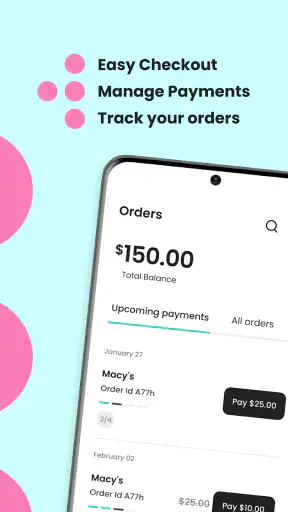
Looking ahead, I would pay attention to improvements that make active plans easier to scan together. A clean overview of upcoming commitments, clear payment-state labels, and prominent total-cost information would strengthen the app’s budgeting value. These are the areas I consider most important because they reduce mistakes without encouraging more spending.
I would also watch how consistently the service works across different retailers and shopping situations. The broader the useful acceptance, the more practical Four becomes, but expansion alone is not enough. I would rather see dependable checkout explanations than a wider list of stores paired with confusing terms or an awkward handoff between the retailer and the app.
For current users, the sensible approach is to update normally, reread the payment details at every purchase, and avoid assuming that a familiar workflow means every new transaction has identical conditions. The version number shows an active product, but responsible use still depends on inspecting the specific plan presented at checkout.
My recommendation
After using Four as a shopping payment tool, I recommend it to people who want structured flexibility and are willing to track what they owe. Its strongest quality is not that it makes shopping feel effortless; it is that it can turn one checkout amount into a schedule I can evaluate before committing. That is useful when the purchase is necessary and the timing is the only real obstacle.
I would not recommend it as a way to stretch an already tight budget or to justify spontaneous purchases. If I cannot explain how every later payment fits into my month, I should not proceed. For straightforward purchases, paying immediately may remain the better choice, while a credit card or another financing option may suit a larger or more complex expense.
Four works best when flexibility is planned, not improvised. Its free access, established presence, and focused design make it worth considering, especially for shoppers whose retailers support it. I would install it with a specific use in mind, compare the complete repayment plan with the direct price, and keep the app as a controlled budgeting tool rather than a reason to buy more.


